
Cash register requirement for cinemas
Germany’s cash register requirement is expected to arrive in 2028. Once your cinema turns over more than €100,000 a year, the box office, concession counter and bar would need an electronic cash register with a TSE. And if you already use electronic registers, receipts are set to go digital.

Under the government bill, the cash register requirement would apply from 1 January 2028: every business with total turnover above €100,000 a year would have to use an electronic cash register with a TSE (certified technical security system), unless it accepts cash and takes less than €12,000 a year in cash sales. Receipts would then be provided digitally, on paper only if the guest asks for it.
Today, businesses that sell goods for cash to a large number of unknown buyers can, under certain conditions, use a manual cash box, known in German as offene Ladenkasse (section 146 of the German Fiscal Code, AO). That is set to change. On 23 September 2026, the federal cabinet approved the bill on the further development of cash records. It is now before the Bundestag as document 21/8867.
Under the bill, businesses with a total turnover above €100,000 in a calendar year would have to use an electronic cash register (new section 146b AO in the bill). It needs a certified technical security system, or TSE, which protects the records from being changed afterwards. Businesses that accept cash but take less than €12,000 a year in cash sales are exempt. The bill does not prescribe a specific technology.
Above these thresholds, the manual cash box would no longer be allowed. According to the explanatory memorandum, debit and credit card payments must be recorded in the register as well as cash payments; bank transfers and direct debits are excluded. The requirement ends once a business stays below the thresholds for two calendar years in a row. In individual cases, the tax office can grant an exemption (section 148 AO).
As of 12 November 2026, the cash register requirement is a government bill. The Bundesrat, which represents the federal states, gives its opinion on 20 November 2026, and the Bundestag then continues its deliberations. According to the enacting formula of the bill, the law will also need the Bundesrat’s consent. Its committees recommend, among other things, a lower threshold of €25,000, ask for a deadline of 1 January 2029 to be considered and call for existing working registers to be protected. Figures and dates may therefore still change. We will add to this article when new decisions are made.
completedplanned
What counts is total turnover under section 19(2) of the German VAT Act, which means turnover excluding VAT. In our assessment, admissions, concessions and catering all count together. The threshold applies to the taxpayer as a whole: if you run several cinemas in one company, their turnover is added up. The bill does not expressly say how this works for cinema groups with several companies.
A quick calculation with the average ticket price reported by the German Federal Film Board (FFA) for 2025 shows the scale:
Half of the 1,651 cinema venues in Germany have a single screen. In 2025, these venues averaged around €77,000 in net ticket revenue, based on our own calculation from FFA figures. That is an average; individual cinemas are well above or below it. With snacks, drinks and catering, even a small cinema can come close to the threshold.
For non-profit associations and municipal cinemas, there is so far only a discussion draft of a regulation from the Federal Ministry of Finance (as of 22 July 2026). Under this draft, the threshold would be assessed separately for each special-purpose operation or commercial activity of a non-profit body, and for municipal cinemas for each commercial operation. Nothing has been decided. Clarify how your cinema is classified with your tax adviser.
The film levy paid to the FFA depends on a different threshold: €150,000 in net ticket revenue per cinema in the previous year (section 128 of the German Film Funding Act, FFG).
We’ll explain what this means for your cinema
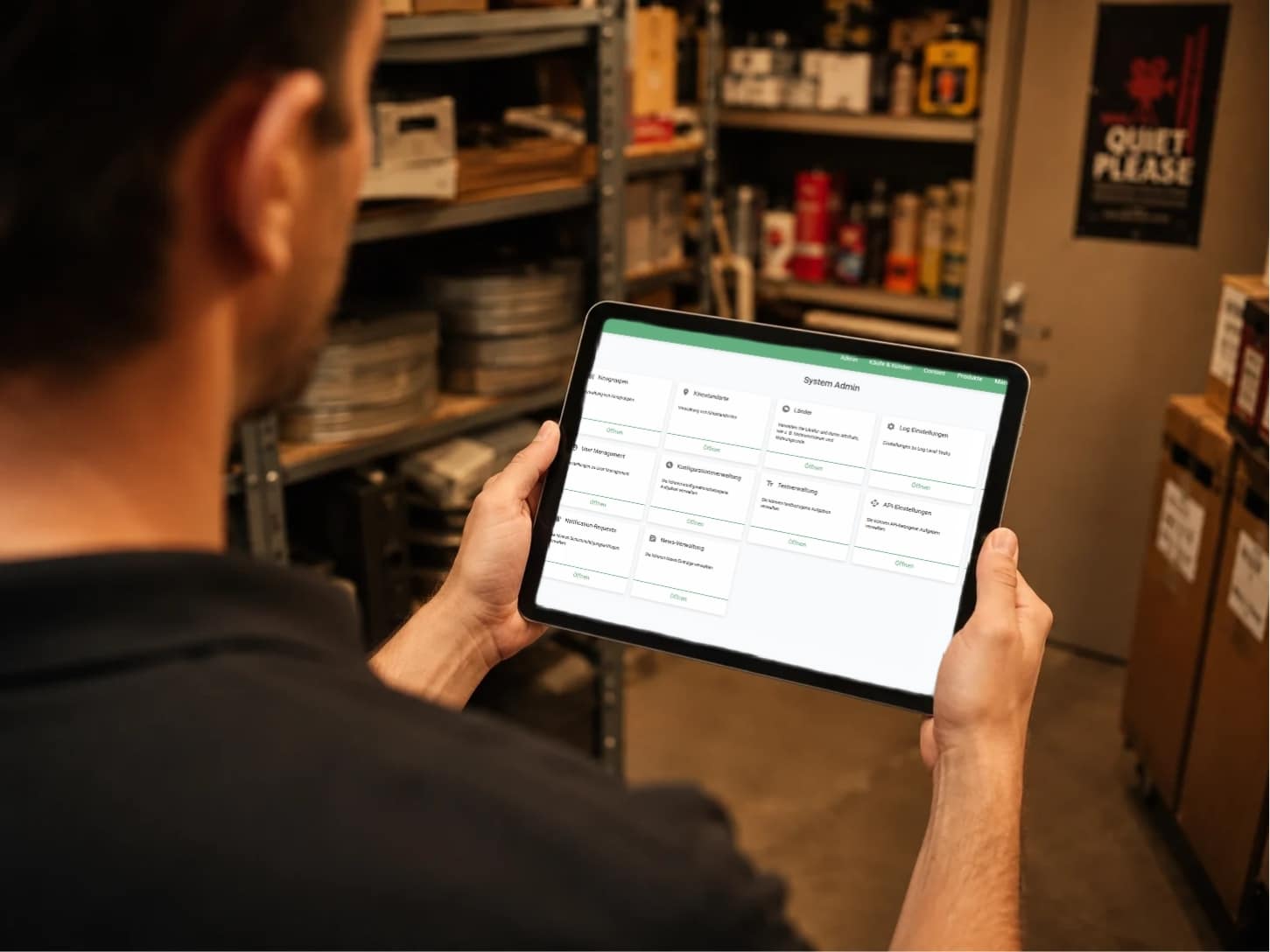
In a short demo, we show you the box office, concession counter and end-of-day closing in the compeso POS system.
If your cinema uses an electronic cash register, these rules already apply today:
Every electronic cash register, whether at the box office, the concession counter or the bar, protects its records with a certified TSE.
Every sale comes with a receipt, on paper or electronically with the guest’s consent. Showing it on the display alone is not enough.
Every register is reported via ELSTER, the tax authorities’ online portal, separately for each business premises. For registers acquired before 1 July 2025, the deadline was 31 July 2025. New or decommissioned registers must be reported within one month.
The tax office can inspect without notice during normal business hours. The bill gives this inspection a new section number.
The second part of the bill affects every cinema with a register under section 146a AO, regardless of the turnover threshold: from 1 January 2028, paper receipts are set to give way to electronic receipts. You choose how: a QR code on the display, a download link, NFC, email or the guest’s account. Guests do not have to accept the receipt. If they want paper, they get paper.
The German cinema association HDF KINO criticised the paper receipt obligation in 2019, because a cinema ticket already contains the relevant details. The bill would end the mandatory printout at the register.
A digital receipt needs a standardised data format and a way to reach the guest, such as a QR code on the display.
You do not need to change anything today because of the planned cash register requirement. The obligations that already apply remain unaffected. You can take these four steps now:
We have been developing software for cinemas since 1984, and today more than 500 cinemas work with us. Our POS system brings ticket sales, concessions and end-of-day closing together at one register.

In a demo, we show you the box office, concession counter and end-of-day closing, and answer your questions about the TSE and receipts.
No. As of 12 November 2026, there is a government bill, Bundestag document 21/8867. The cabinet approved it on 23 September 2026, and the first reading in the Bundestag took place on 6 November 2026.
Under the government bill, from 1 January 2028, for everyone above the thresholds in 2026. If you exceed the threshold for the first time in 2027 or later, the requirement applies from 1 July of the following year. The coalition agreement had named 1 January 2027.
Under the bill, from a total turnover above €100,000 per calendar year, calculated under section 19(2) of the German VAT Act excluding VAT. Businesses that accept cash but take less than €12,000 a year in cash sales are exempt. The Bundesrat committees recommend a lower threshold of €25,000.
The bill refers to total turnover under section 19(2) of the German VAT Act. In our assessment, admissions, concessions and catering therefore count together, for the taxpayer as a whole. The Federal Ministry of Finance has not commented on cinemas specifically.
This is not expressly regulated. The German Cash Register Security Ordinance (KassenSichV) exempts goods and service vending machines. Whether a ticket machine or kiosk in the foyer falls under this exemption is open.
That is still open. A discussion draft of a regulation from the Federal Ministry of Finance (as of 22 July 2026) proposes assessing the threshold for non-profit bodies per special-purpose operation or commercial activity, and for municipalities per commercial operation. Nothing has been decided.
If all your points of sale, including the concession counter and bar, run on a system with a TSE, you are probably well prepared for the core of the bill. From 2028, the bill would add the digital receipt, and a change of TSE would have to be reported to the tax office within one month.
From 1 January 2028, paper receipts are set to give way to electronic receipts, for example as a QR code on the display, a link, NFC or email. So there will still be a receipt, on paper only if the guest asks for it. Under the bill, this applies to every register under section 146a AO, regardless of the turnover threshold.
Under the bill, anyone who does not use an electronic system despite the requirement may commit an administrative offence if they act intentionally or recklessly and thereby make tax evasion possible. According to the explanatory memorandum, the fine can be up to €25,000. The same range already applies today to breaches of the TSE obligation. If records are missing, the tax office can also estimate turnover.
SolutionCinema POS systemView solution

NewsroomIncrease cinema revenue: ticket and concession salesRead articleThis article reflects the status as of 12 November 2026 and does not constitute tax or legal advice.

Newsletter
Subscribe to our newsletter and receive news, insights, and inspiration from the cinema world directly in your inbox.