

Increase cinema revenue: why the webshop decides on ticket, snack and seat
Table of contents
Anyone who runs a cinema knows the maths: only a fraction of the ticket price is left at the end. The real margin is made elsewhere – in cinema food and drink, in premium seats and in concession revenue. And this is exactly where the webshop plays a role that many underestimate.
How can cinema revenue be increased, and what part does online ticketing play in that? Where margin really comes from in a cinema operation, why buying a ticket online influences far more than just ticket sales, and how you can optimise your cinema webshop to make the most of its full potential.
How do cinemas make money? Tickets, concessions and additional sales
At first glance it looks simple: the cinema sells tickets, the cinema earns money. In reality, ticket income is the slimmest of all margins for many venues. But with a well-thought-out webshop, concession and marketing, cinema revenue can be increased.
The ticket dilemma
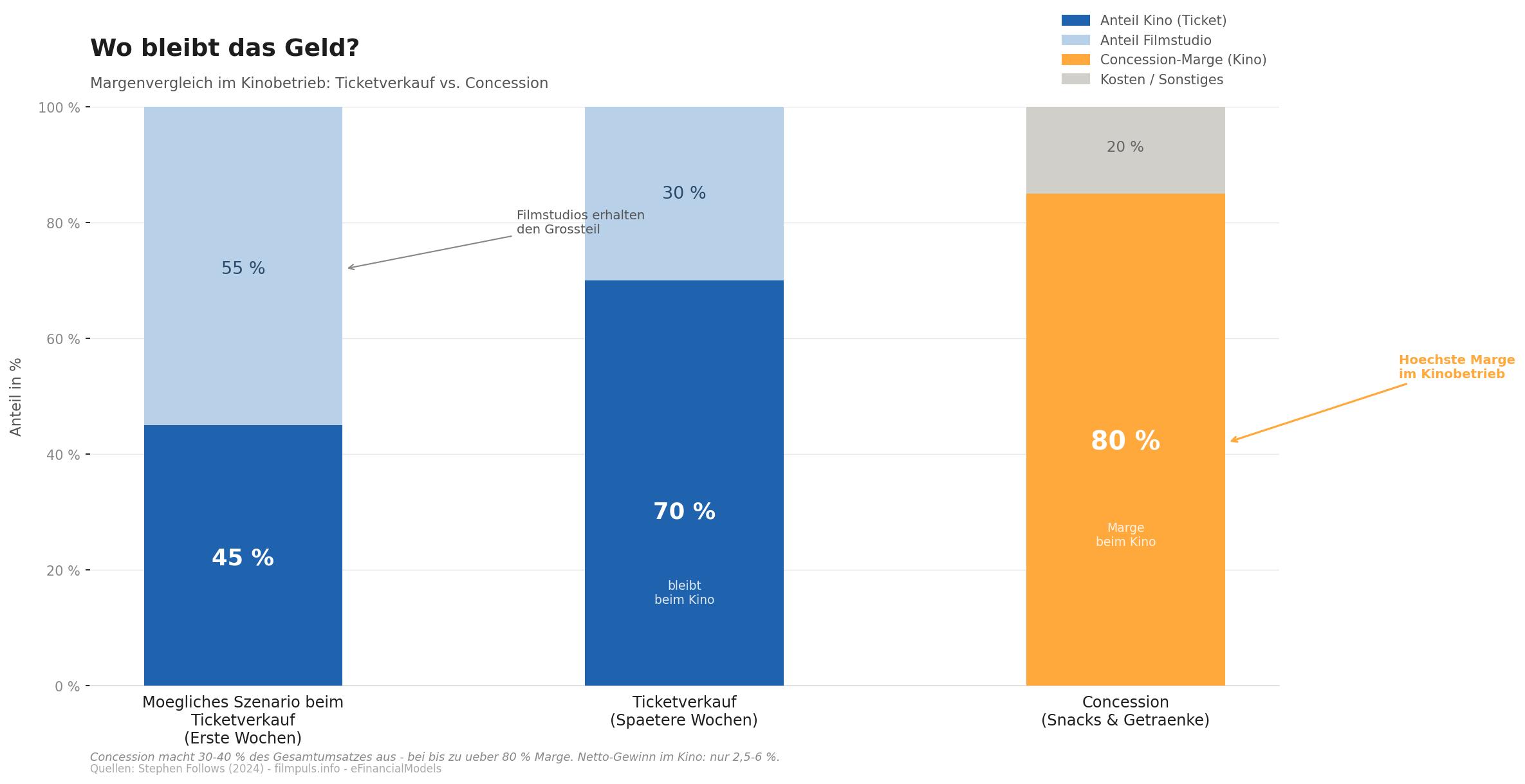
In the first weeks after the nationwide release, film studios receive between 30 and 55 % of the ticket income. Only in later weeks does the ratio shift in favour of the cinemas. What reaches the cinema often barely covers running costs. Only in later weeks does the ratio move to around 70/30 – but by then fewer guests are often coming.
According to industry analyses, the net profit of an average cinema operation is a mere 2.5 to 6 per cent. Every lever counts when you want to increase your cinema revenue.
Concession revenue in the cinema: where the margin sits
The area that makes the biggest commercial difference for cinema operators is food and drink. Margins on popcorn, nachos and soft drinks run as high as 80 per cent – and the cinema keeps 100 per cent of that income.
In Germany, food and drink now accounts for 30 to 40 per cent of a cinema’s total revenue. The industry record stood at 555 million euros of concession revenue in the cinema and an all-time high of 35 per cent of total revenue.
At a glance:
- In the first 1 – 2 weeks after the nationwide release, film studios receive between 30 – 55 % of the ticket income
- Concession margins run as high as 80 %
- Food and drink accounts for 30–40 % of total revenue
- A cinema’s net profit is only 2.5–6 %
Why online buyers make the difference
Two out of three cinema tickets are bought digitally, and the trend is rising (Boxoffice 2019). And with the move from the box office window to the smartphone, it is not only how guests buy their ticket that changes. It changes how much they spend in total, which also has a bearing on how you can increase your cinema revenue.
More snacks, more premium, more groups
A study by Boxoffice Pro, based on more than 100,000 cinemagoers surveyed, shows a clear pattern: guests who buy their ticket online order snacks and drinks alongside more often, choose premium seats more often and come in groups more often.
Particularly striking: sales of meals rose by more than 30 per cent among digital ticket buyers. That is no coincidence – booking online gives you more time to discover what is on offer. Without time pressure at the till, without a queue behind you.
Pre-ordering changes buying behaviour
A growing trend confirms it: according to a Fandango study, one ticket buyer in four has already pre-ordered concession at some point. And when cinemas build this option into their webshop, the picture is clear: guests order more calmly, discover the whole range and often spend more.
AMC, the largest cinema chain in the USA, reported a record average of 7.99 USD per guest in the F&B area. That is a clear jump from the pre-pandemic average of 5.60 USD. A key driver: digital ordering and pre-ordering options.
At a glance:
- Online buyers order snacks, premium seats and group tickets more often
- Concession sales in the cinema can rise by up to 30%
- Every 4th ticket buyer has already pre-ordered concession online
- Pre-ordering lowers stress and raises the average basket
What guests expect from the webshop, and where they drop out
A good webshop is far more than a digital shop window. But what exactly do guests expect when they buy a cinema ticket online? And where do you lose them? Guests dropping out can be avoided, and your cinema webshop can be optimised.
The 3-second moment
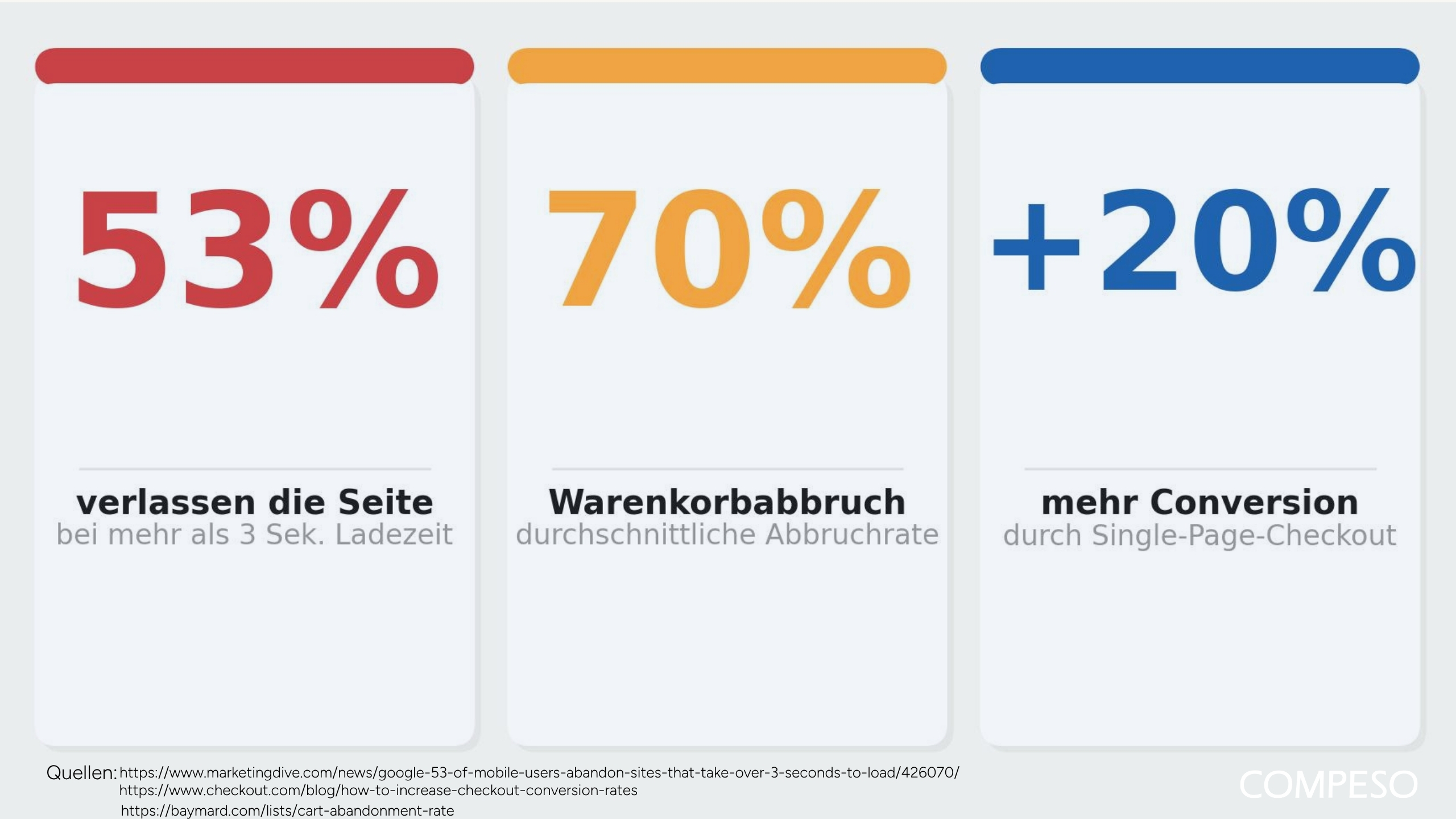
53 per cent of users abandon a page if it takes longer than three seconds to load. That sounds like very little – but in a world where large platforms set the standard, guests compare every online experience with the best they know. Including your cinema’s.
And the figures go further: the average basket abandonment rate in e-commerce is around 70 per cent – calculated from more than 50 independent studies. Ticket sales are no exception.
Experience beats product
88 per cent of respondents in a Salesforce study with more than 14,000 participants say the buying experience is just as important as the product itself. Translated to the cinema, that means the visit does not begin in the auditorium, it begins on the smartphone.
And if something snags there, the guest may well still come to the cinema. But the snack, the premium seat, the group booking? Those fall by the wayside. Precisely the areas, then, where the margin sits and where the chance to increase concession revenue in the cinema lies.
Fewer clicks, more tickets. Optimising your cinema webshop
Studies show that reducing the checkout to a single page increases conversion by up to 20 per cent. And cutting the form fields from six to three loses far fewer guests on the way to payment.
That sounds like detail. But it is exactly the details that decide whether a ticket purchase turns into a whole evening at the cinema, and whether you can increase your concession revenue in the cinema.
At a glance:
- 53 % abandon the page if it takes longer than 3 seconds to load
- The average basket abandonment rate is 70 %
- 88 % say the buying experience is just as important as the product
- A single-page checkout increases conversion by up to 20 %
How you can check this: a short checklist
Figures and studies are one thing. But what do they mean for your cinema? Here are concrete starting points that are worth it and that can be put in place, or at least checked, fairly quickly, in order to increase your concession or cinema revenue.
1. Measure the loading time
Open your webshop on a smartphone and count along. Does it take longer than three seconds for the page to settle? Then you are probably losing guests before they even see a ticket. Tools such as Google PageSpeed Insights show you in seconds how your webshop performs – and where the biggest brakes are.
2. Count the checkout steps
Walk through the buying process yourself, from choosing the film to the confirmation. How many pages, clicks and form fields lie in between? Every extra step is a place where guests can drop out.
3. Check concession in the webshop
Can a guest pre-order snacks and drinks at the same time as buying a ticket online? Or are tickets and food and drink two separate worlds? The figures are clear: those who link the two sell more, because guests discover the range at their leisure instead of standing at the counter under time pressure.
4. Make premium options visible
Do you offer premium seats, boxes or VIP areas? Then check how prominently they appear in the booking process. Online buyers demonstrably choose upgrades more often – but only if they see the option. A well-designed seating plan with a clear distinction between standard and premium can achieve a great deal here.
5. Test bundles
Ticket + popcorn + drink as a package has long been standard in over-the-counter sales as a way of lifting concession revenue in the cinema. But does it work in the webshop too? Combo offers and upsell logic in the digital checkout can noticeably raise the average basket and increase cinema revenue. They give the guest the feeling of getting a good deal instead of clicking everything together item by item.
At a glance:
- Keep the loading time under 3 seconds
- Reduce checkout steps to a minimum
- Integrate concession pre-ordering into the ticket purchase
- Make premium options visible in the booking process
- Offer and test bundle deals digitally
Would you like to know what CineOrder could look like in your cinema?
CineOrder in action
All of these points – fast loading times, a lean checkout, concession within the buying process, premium options, bundles – sound like a lot of work at first. But that is exactly what solutions developed specifically for cinemas are there for.
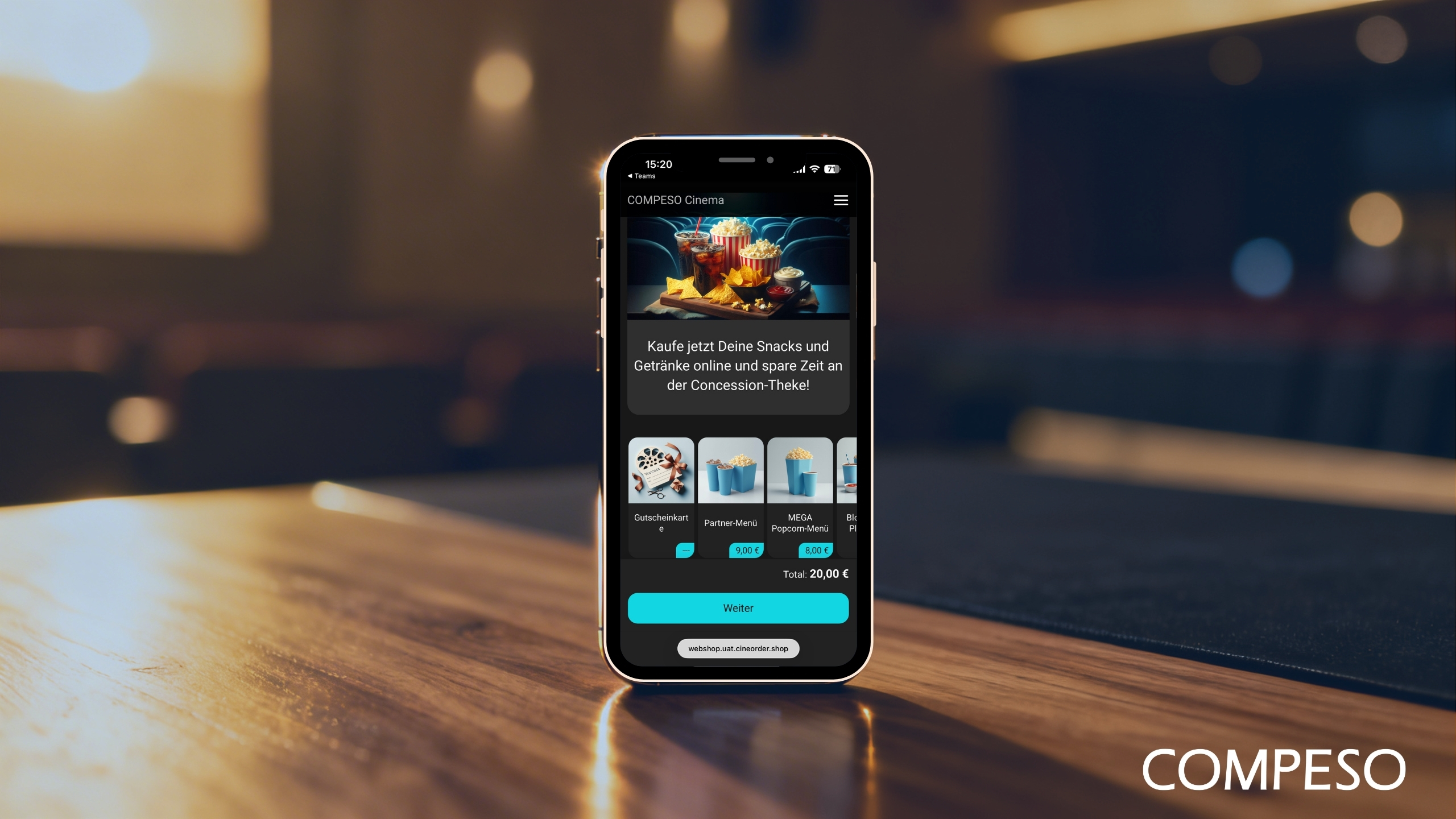
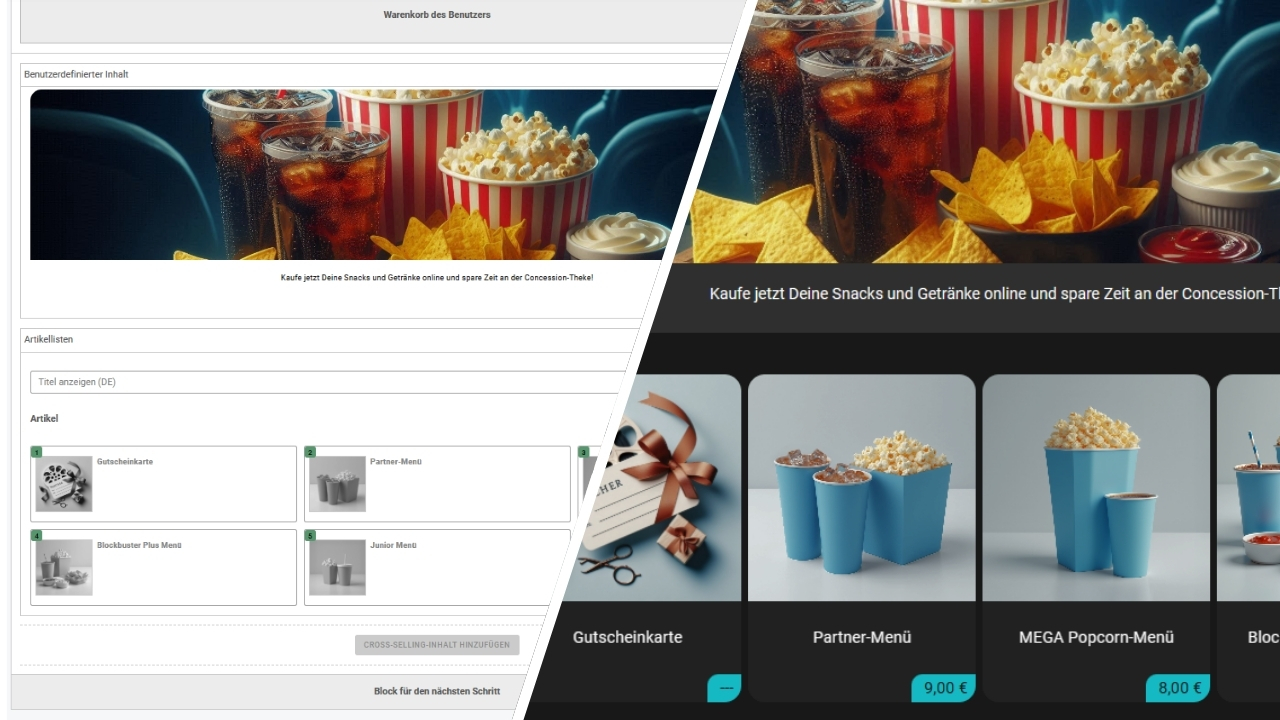
CineOrder is the webshop from Compeso and brings ticketing, seat selection and food and drink together in a single buying process. Guests can book their ticket, choose their favourite seat and pre-order snacks and drinks at the same time – all on the smartphone, in one flow.
That changes how guests shop: they discover the full range at their leisure, choose extras more often and arrive at the cinema with clear anticipation. The CineOrder webshop can increase concession revenue. The digital buying process removes barriers that often lead guests to skip snacks at the physical counter, costing you concession revenue in the cinema.
And that applies well beyond the webshop: with digital ordering options directly at the seat or self-service terminals in the foyer, the same effect can be achieved on site.
Whether as a cloud solution or installed on your own server, CineOrder adapts to the cinema, not the other way round.
The webshop is the first moment of the cinema evening
The figures paint a clear picture: margin in a cinema operation does not come from the ticket – it comes from everything around it. And the webshop plays a decisive part in whether a guest buys just a ticket or plans a whole evening at the cinema.
Three questions worth asking for every cinema operator:
How fast does your webshop really load? How many steps does a guest need to reach payment? Can they add snacks or a better seat along the way?
Look closely here and you soon notice how much potential is sitting in your own webshop, and how you can increase your cinema revenue.
That said, it is not only the webshop that matters, but also the experience around it.
FAQs about the webshop
A cinema can increase its revenue by linking ticket sales and concession digitally. When guests order snacks before their visit, in the webshop, at a terminal or directly at their seat, waiting times fall and the team is relieved. At the same time the average basket often rises, because guests browse at their leisure, see more products and add extra items more easily.
Concession revenue in the cinema rises above all when guests can buy earlier, more calmly and with the range in plain sight. Digital pre-ordering, self-service terminals and ordering at the seat make the range more visible, reduce buying pressure at the till and encourage additional sales. Depending on the scenario, considerable increases in revenue are possible, for example through self-service solutions or by connecting ticket and concession sales.
A cinema webshop increases snack and drink sales because guests order without a queue and without time pressure. They see the whole range clearly, can buy tickets and concession in one flow, and decide on extras or upgrades spontaneously more often. Menu bundles in the right place can take the decision off the guest’s hands, so that they buy more.
Yes. Self-service takes pressure off the staffed sales areas, because guests can handle standard purchases themselves. Waiting times get shorter, peak times are easier to absorb and the team can concentrate more on advice, service and guest contact. At the same time guests often notice extra options at the terminal more consciously, which can support concession sales further
With digital in-seat ordering, the guest scans a QR code and uses their smartphone to order snacks and drinks directly from their seat. The order runs digitally, is prepared and is delivered to the right place. That cuts down on walking, avoids queues and creates additional buying opportunities during the screening or before the film even starts.
When ticket sales and concession are combined in one ordering process, the cinema visit becomes simpler for guests and easier for the cinema to plan. Guests order everything in one step, preparation starts earlier and additional purchases become more likely. At the same time there are fewer bottlenecks at the till and the counter.
